

Faucets
There are a variety of different types of faucets and this article is not going to go into great detail about each of them. Rather,
this article is going to cover the most common types of facucets found in your home.
Kitchen Faucets:
Kitchen faucets are the symbol of the home, they always have been. Where it's true that the bathroom fixtures dominate the rest of the
house, the kitchen faucet leads the way with decore. Do a history lesson, lavatory or bathroom faucets have always followed the kitchen
design. Today, it's the single handle gooseneck that people want, but not too long ago it was a two handle side spray. Either way, the
kitchen faucet sets the stage, so let's discuss the differences.
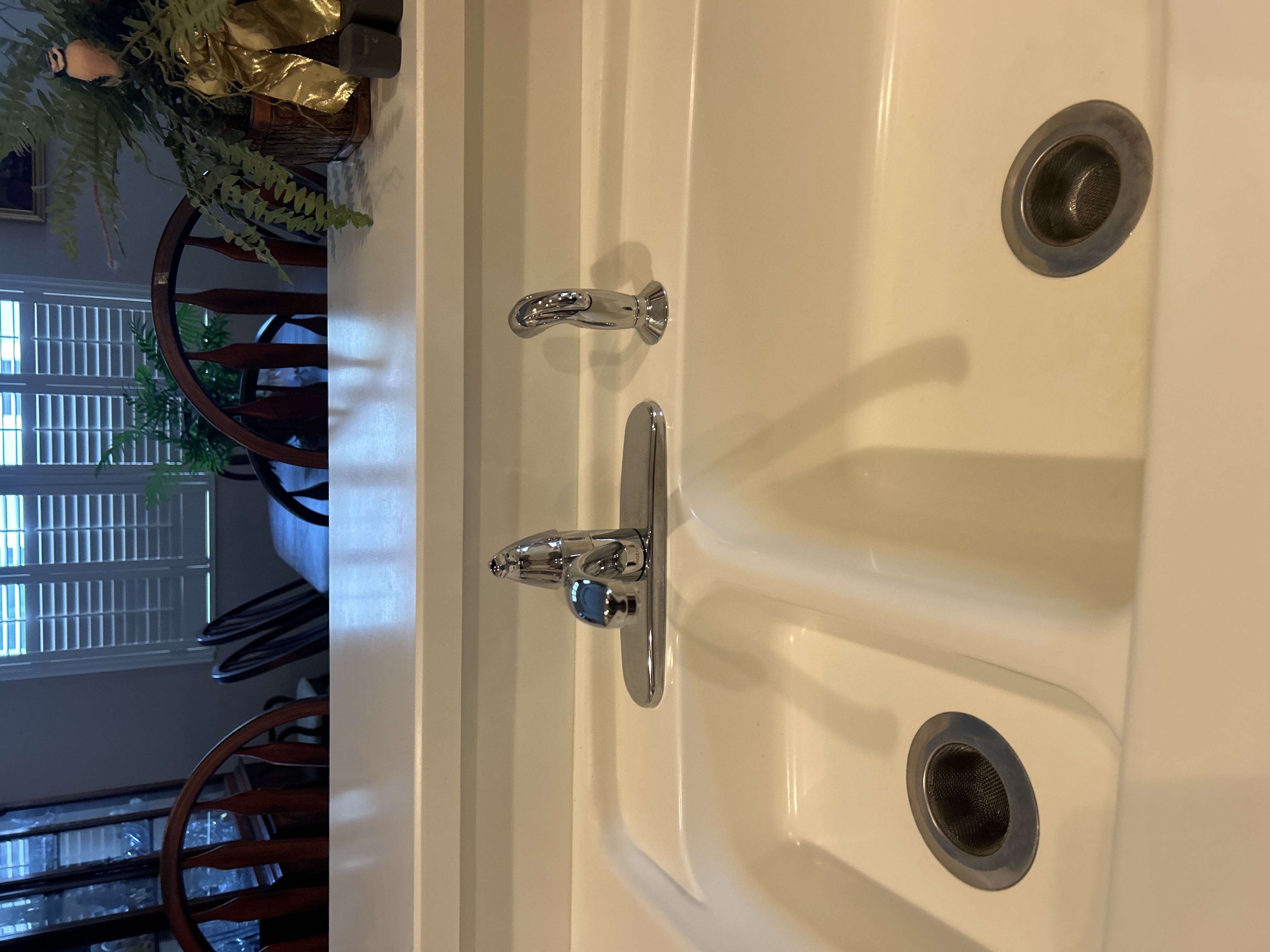
Single handle or two handle? The single handle offers the most sleek and modern design. It's design and features dictate the rest of the
kitchen. The single handle has two features that the two handle handle will never have. First, it can come with a pull out spray that
comes directly out of the neck location and secondly the cartiridge is designed with safety in mind. As for the pull out spray,
this is beneficial in a couple of different ways. To begin with, it is connected to the neck of the faucet; meaning that the spray can
cover each compartment of the sink equally and fairly easily. As for the cartridge, it is designed to reduce the amount of hot water that
the faucet can put out. This is good for parents who have children living at home, and/or for the aging parent or disabled loved one.
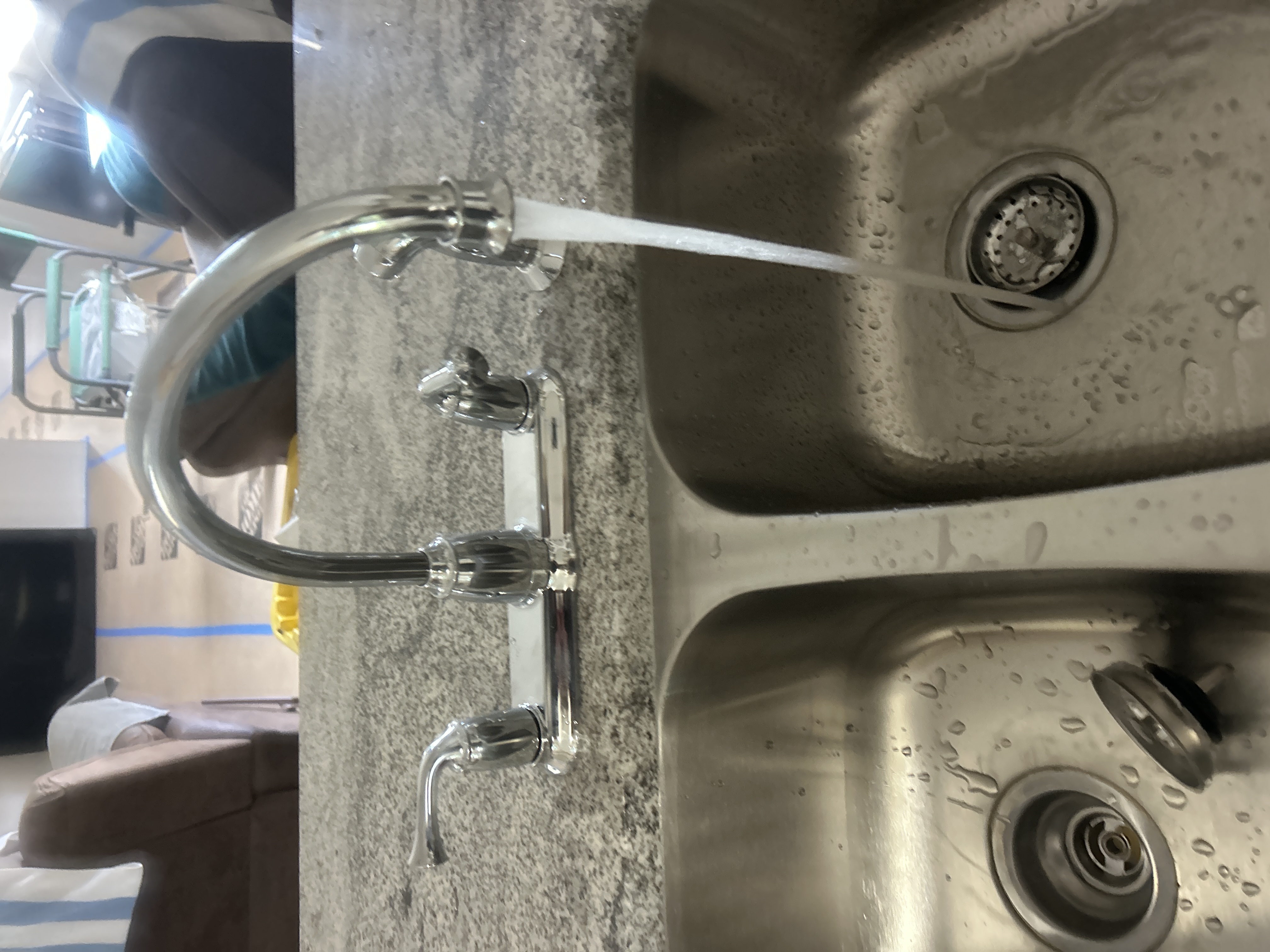
Two handle kitchen faucets have their own features that make them ideal for the kitchen. To begin with, the illusion of control. By having
two handles, the user feels as though they are in control of the flow and temperature of the water coming out. This is only true of the
water temperature and how it mixes. The flow rather is constant and largely control by the aerator. The second feature of the two handle
design comes in the deesign of the neck as you can have a higher gooseneck ideal for cooking pots.
Which every design you choose, both come in the same finishes and are manufactured by the top manufacturers. Just remember the next
time you look at your stove, the design and finish probably was influenced by the kitchen faucet.
Bathroom faucets are probably seen and used more often then the kitchen faucet and as stated above dominate the homes fixtures. They really
are a status symbol for the rest of the house. This is true for both design and function; single vs two handle, four inch vs eight inch
spread, polished brass vs chrome. So let's discuss the options and differences below.
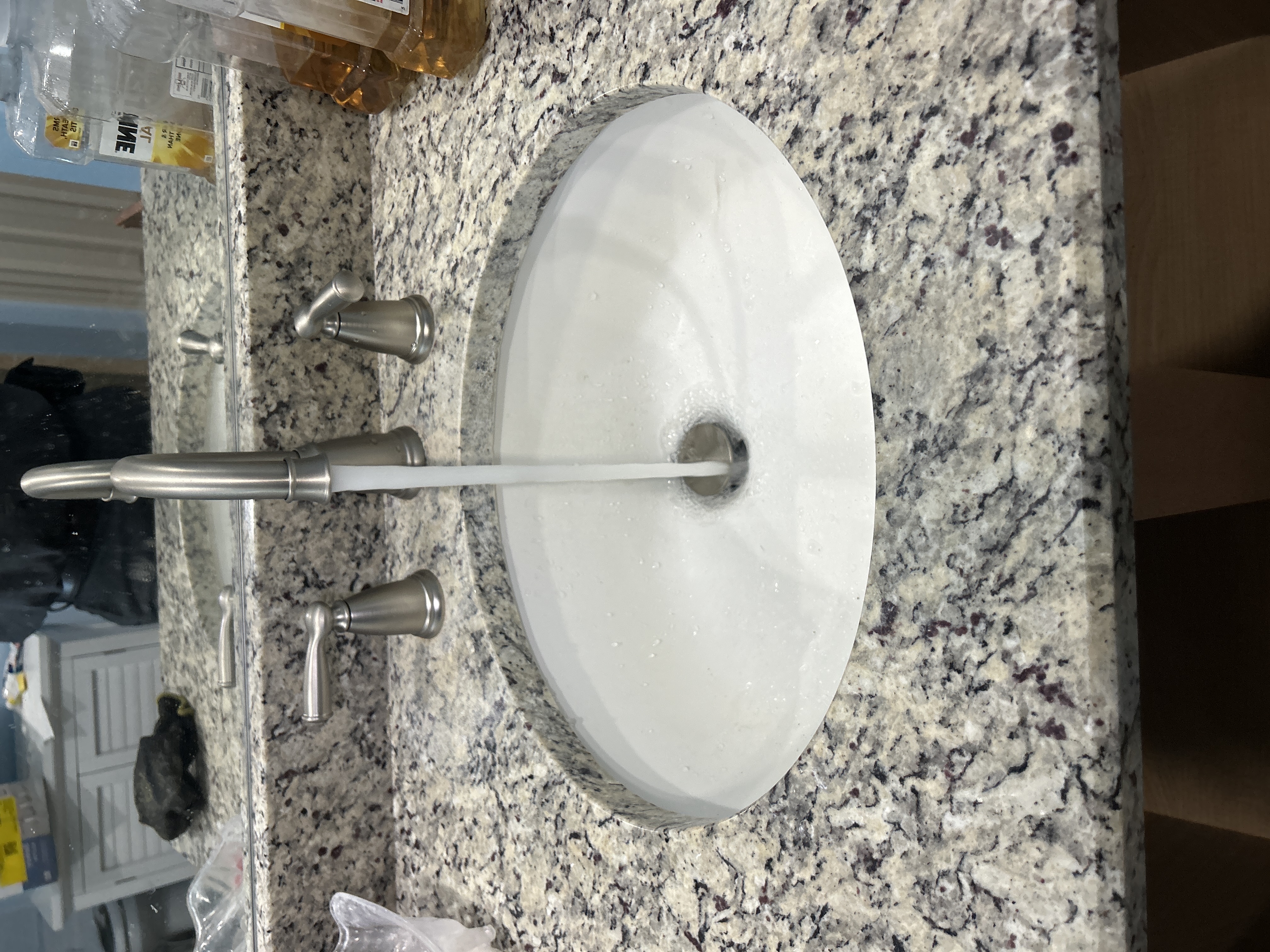
Like the kitchen faucet, the bathroom or lavatory faucet can come in a single or two handle design and also just like the kitchen faucet,
the single and two handle design function the same. That's about where the similarities end however as the lavatory faucet has something
that the kitchen faucet does not have; a pop-up assenbly. The pop-up assembly or drain as the user would recognize it is activated
when a rod is pulled up from behind the faucet. The location of this rod is dictated almost ebtirely by the style of handle choosen. As an
example, all single handle lavatory faucets are going to have this rod in generally the same place; directly behind the spout and on an
angle. The two handle lavatory faucets also are bound to this same location however the degree of angle can be largely removed and/or
eliminated all togater.
This pop-up rod location is something to take into consideration when purchasing a new latatory faucet. The main reason as to why comes
down the the type and style of your countertop. For instances, granite countertops with backsplashes will often times inhibit the use of
an angled pop-up rod and/or render it completely useless. The same can be said about corain. Manufactures have tried to solve this problem
by creating a differnt type of pop-up assembly but it to comes with its own draebacks. The push drain, as I like to call it.
This style eliminates the need for the rod which also frees up the single handle style, but the user must now push directly on the drain
to both close and open it. I'll let you do the imagry. Finally, befote we get into the weeds between the lavatory
faucets, there's one more distinction to make; size, 4" & 8". What's the differences? Is one better than the other?
4" spread lavatory faucets are going to be the most common bathroom faucet that anyone is every going to see in a random household.
This is largely due to three reasons. First, nearly every single residential trac home countertop is designed for a 4" spread lavatory
faucet. Secondly, they take less time to install, and lastly, they costs less.
8" spread lavatory faucets in contrast are not as easy to install or as inexpensive. The reasons are clear; 8" spread lavatory faucets
are built and sold as more of a statement piece; an accent to the home if you will. For example, an 8" spread lavatory faucet has three
different individual pieces whereas the 4" spread lavatory faucet only has one. These seperate pieces gives the 8" lavatory faucet a distinct
advantage; style. By having sepeerte pieces, the handles and sprout can be trimmed out in any number of different styles. The 4" lavatory
faucet can only have one style as it is restricted to the confines of a deck plate.
This is not to say that the 4" spread lavatory faucet cannot look stylist or make a luxurious presences to the home. Quite the cotrary,
the styles and finishes offered to the 8" are also offered to the 4" with few exceptions. All the 8" does is make the bathroom pop,
be more noticable, the fuctionailty is still the same.